1
Fact Summary
Connections to George Washington
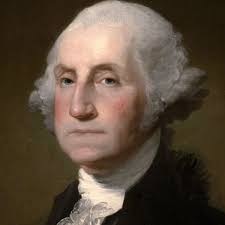
Gilbert Stuart Williamstown portrait of George Washington
2
George Washington
Born February 22, 1732
Died December 14, 1799
Gilbert Stuart Williamstown portrait of George Washington
An American soldier, statesman, and Founding Father who served as the first President
of the United States from 1789 to 1797. Appointed by the Continental Congress as
commander of the Continental Army, Washington led the Patriot forces to victory in the
American Revolutionary War, and presided at the Constitutional Convention of 1787,
which established the Constitution of the United States and a federal government.
Washington has been called the "Father of the Nation" for his manifold leadership in the
formative days of the country.
(Wikipedia: George Washington)
Offices:
•
Commander of the Continental Army
from July 19, 1775 to December 3, 1783
.
•
U.S. President
from April 30, 1789 to March 3, 1797
.
February 22, 1732
Born
July 19, 1775
Commander of the Continental Army (term begins)
December 3, 1783
Commander of the Continental Army (term ends)
April 30, 1789
U.S. President (term begins)
March 3, 1797
U.S. President (term ends)
December 14, 1799
Died
3
John Adams
Born October 30, 1735
Died July 4, 1826
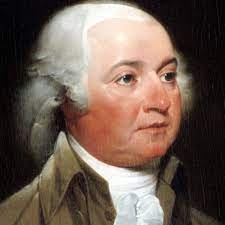
Portrait of John Adams
An American statesman, attorney, diplomat, writer, and Founding Father who was the
second president of the United States. Before his presidency, he was a leader of the
American Revolution that achieved independence from Great Britain. Adams was a
dedicated diarist and regularly corresponded with many important figures in early
American history, including his wife and adviser Abigail Adams and Thomas Jefferson
(Wikipedia: John Adams)
Offices:
•
U.S. Vice-President
from April 30, 1789 to March 3, 1797
.
•
U.S. President
from March 4, 1797 to March 4, 1801
.
October 30, 1735
Born
April 30, 1789
U.S. Vice-President (term begins)
March 3, 1797
U.S. Vice-President (term ends)
March 4, 1797
U.S. President (term begins)
March 4, 1801
U.S. President (term ends)
July 4, 1826
Died
4
Thomas Jefferson
Born April 13, 1743
Died July 4, 1826
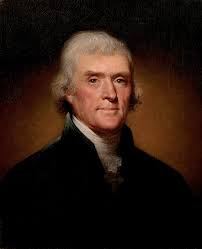
Official Presidential portrait of Thomas Jefferson
An American statesman, diplomat, lawyer, architect, philosopher, and Founding Father
who served as the third president of the United States from 1801 to 1809. He had
previously served as the second vice president of the United States under John Adams
and as the first United States Secretary of State under George Washington. The principal
author of the Declaration of Independence, Jefferson was a proponent of democracy,
republicanism, and individual rights, motivating American colonists to break from the
Kingdom of Great Britain and form a new nation; he produced formative documents and
decisions at both the state and national levels.
(Wikipedia: Thomas Jefferson)
Offices:
•
U.S. Vice-President
from March 4, 1797 to March 4, 1801
.
•
U.S. President
from March 4, 1801 to March 4, 1809
.
April 13, 1743
Born
March 4, 1797
U.S. Vice-President (term begins)
March 4, 1801
U.S. Vice-President (term ends)
March 4, 1801
U.S. President (term begins)
March 4, 1809
U.S. President (term ends)
July 4, 1826
Died
5
John Quincy Adams
Born July 11, 1767
Died February 23, 1848
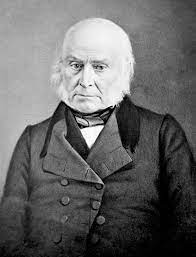
Portrait of John Quincy Adams
An American statesman, diplomat, lawyer, and diarist, who served as the 6th president
of the United States from 1825 to 1829. He previously served as the 8th United States
Secretary of State from 1817 to 1825.
(Wikipedia: John Quincy Adams)
Offices:
•
Secretary of State
from 1817 to 1825
.
•
U.S. President
from March 4, 1825 to March 3, 1829
.
July 11, 1767
Born
January 1, 1817
Secretary of State (term begins)
January 1, 1825
Secretary of State (term ends)
March 4, 1825
U.S. President (term begins)
March 3, 1829
U.S. President (term ends)
February 23, 1848
Died
6
American Revolutionary War
April 19, 1775
Also known as the Revolutionary War or American War of Independence. It secured a
1
United States of America independent from Great Britain. The American Patriots were
2
supported by France and Spain, conflict taking place in North America, the Caribbean, and
3
Atlantic Ocean. It ended when Britain accepted American independence in the Treaty of Paris,
4
while the Treaties of Versailles resolved separate conflicts with France and Spain.
(Wikipedia:
5
American Revolutionary War)
6
Declaration of Independance
July 4, 1776
The United States Declaration of Independence is the pronouncement adopted by the
7
Second Continental Congress meeting in Philadelphia, Pennsylvania, on July 4, 1776. Enacted
8
during the American Revolution, the Declaration explains why the Thirteen Colonies at war with
9
the Kingdom of Great Britain regarded themselves as thirteen independent sovereign states, no
10
longer under British rule. With the Declaration, these new states took a collective first step in
11
forming the United States of America. The declaration was signed by 56 of America's Founding
12
Fathers, congressional representatives from New Hampshire, Massachusetts Bay, Rhode Island
13
and Providence Plantations, Connecticut, New York, New Jersey, Pennsylvania, Maryland,
14
Delaware, Virginia, North Carolina, South Carolina, and Georgia.
(Wikipedia: United States
15
Declaration of Independence)
16
References
Wikipedia: American Revolutionary War—American Revolutionary War,
https://en.wikipedia.org/
wiki/American_Revolutionary_War
Wikipedia: George Washington—George Washington,
https://en.wikipedia.org/wiki/
George_Washington
Wikipedia: John Adams—John Adams,
https://en.wikipedia.org/wiki/John_Adams
Wikipedia: John Quincy Adams—John Quincy Adams,
https://en.wikipedia.org/wiki/John_
Quincy_Adams
Wikipedia: Thomas Jefferson—Thomas Jefferson,
https://en.wikipedia.org/wiki/Thomas_Jefferson
Wikipedia: United States Declaration of Independence—United States Declaration of Independence,
https://en.wikipedia.org/wiki/United_States_Declaration_of_Independence